Introduction
Creating high-quality digital artwork no longer requires advanced design skills or expensive software. Thanks to modern image generation technology, anyone can transform simple text descriptions into impressive visuals within seconds. Whether you’re a blogger, marketer, student, content creator, or business owner, these tools make it easier to create eye-catching graphics for various projects.
If you’re searching for the Best Free AI Image Generators You Should Try, you’ve come to the right place. Free image generators have become increasingly popular because they help users save time, reduce design costs, and explore creative ideas without needing years of artistic experience. From realistic portraits and fantasy landscapes to product mockups and social media graphics, these platforms offer endless creative possibilities.
However, not every image generator delivers the same quality or features. Some focus on realistic artwork, while others excel at illustrations, anime, digital paintings, or graphic design. Understanding their strengths and limitations can help you choose the right tool for your needs.
This beginner-friendly guide explains everything you need to know about the Best Free AI Image Generators You Should Try, including how they work, why they matter, how to choose one, their benefits, potential drawbacks, common mistakes to avoid, frequently asked questions, and expert tips for achieving better results.
What Are the Best Free AI Image Generators You Should Try?
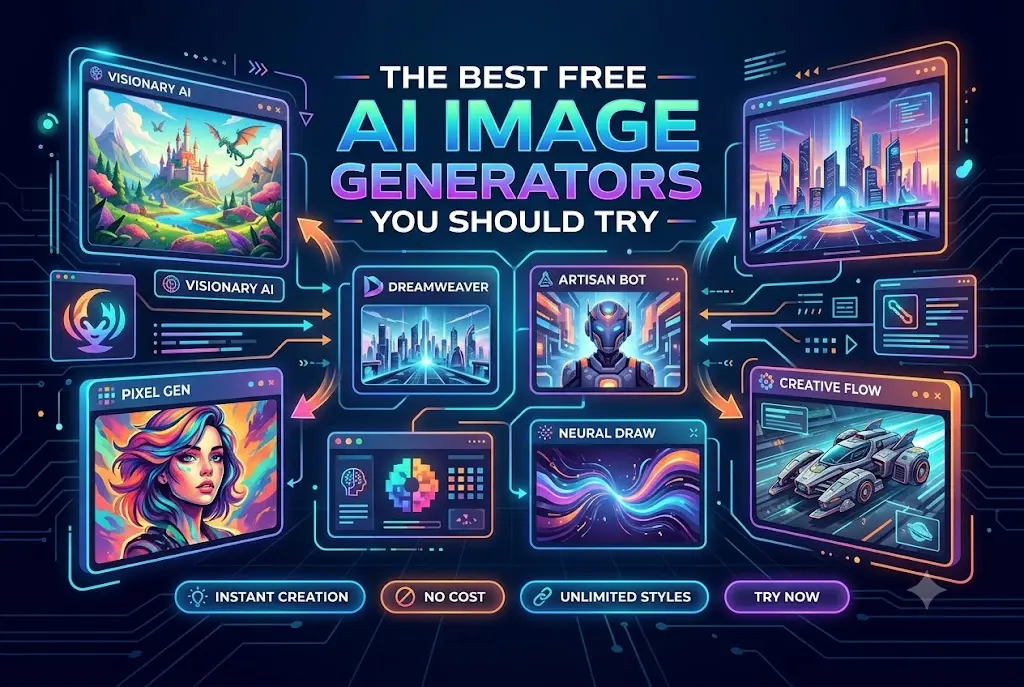
Free image generators are online tools that create digital images based on written descriptions, reference images, or creative prompts. Instead of drawing manually, users simply describe what they want, and the software generates artwork in seconds.
These platforms can produce:
- Digital paintings
- Realistic portraits
- Landscapes
- Cartoon illustrations
- Anime characters
- Product concepts
- Logos
- Social media graphics
- Book covers
- Marketing visuals
The Best Free AI Image Generators You Should Try are designed to make visual creation accessible to everyone, regardless of artistic experience.
Some platforms specialize in photorealistic images, while others focus on artistic styles or creative illustrations. Choosing the right one depends on your goals and preferred design style.
Why Are the Best Free AI Image Generators Important?
Visual content attracts more attention than plain text. Businesses, educators, bloggers, and social media creators rely on attractive graphics to communicate ideas more effectively.
Using free image generators offers several advantages:
- Reduces design expenses
- Saves valuable time
- Helps generate creative ideas
- Supports content marketing
- Makes visual storytelling easier
- Encourages experimentation
- Improves productivity
- Makes professional-looking graphics accessible to beginners
As digital content continues to grow, learning how to use these tools effectively becomes an increasingly valuable skill.
Detailed Step-by-Step Guide
Step 1: Define Your Purpose
Before selecting an image generator, decide exactly what you need.
Ask yourself:
- Is it for social media?
- A blog post?
- Business presentation?
- Marketing campaign?
- Personal artwork?
- Educational material?
Clear goals help you choose the most suitable platform.
Step 2: Choose the Right Free Image Generator
Different platforms are designed for different purposes.
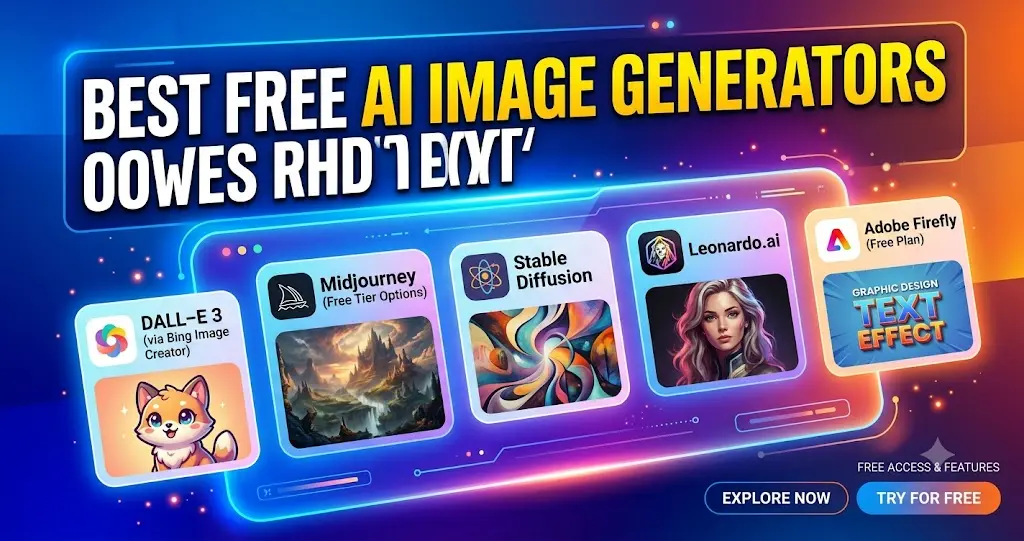
Popular free options include:
- Microsoft Designer Image Creator
- Adobe Firefly
- Leonardo AI
- Playground AI
- Ideogram
- Mage Space
- PixAI
- Dream by WOMBO
Each offers unique strengths.
Some create realistic images, while others focus on illustrations or artistic styles.
Step 3: Write a Detailed Prompt
The quality of your image depends largely on your prompt.
Instead of writing:
“A dog”
Try:
“A golden retriever running across a green meadow during sunset with realistic lighting and detailed fur.”
Specific prompts usually generate better results.
Include details like:
- Colors
- Lighting
- Style
- Mood
- Camera angle
- Background
- Quality
- Composition
Step 4: Select an Art Style
Many generators allow users to choose styles such as:
- Realistic
- Watercolor
- Oil painting
- Digital art
- Fantasy
- Anime
- Cartoon
- 3D render
- Pixel art
- Sketch
Experimenting with styles often produces surprisingly creative outcomes.
Step 5: Adjust Settings
Most platforms provide customization options.
These may include:
- Image size
- Aspect ratio
- Quality
- Number of images
- Creativity level
- Detail level
Small adjustments can significantly improve the final image.
Step 6: Generate Multiple Versions
Avoid using the first generated image immediately.
Instead:
- Generate several variations.
- Compare results.
- Select the strongest version.
- Modify the prompt if necessary.
Professional creators often repeat this process several times.
Step 7: Edit the Final Image
Even excellent generated images may benefit from small edits.
Common improvements include:
- Cropping
- Color correction
- Brightness adjustment
- Contrast enhancement
- Background cleanup
- Text addition
Minor editing often creates a more polished final product.
Step 8: Understand Usage Rights
Before publishing images commercially, always review each platform’s licensing policies.
Some free tools allow commercial use.
Others limit usage or require attribution.
Understanding these conditions helps avoid future copyright issues.
Best Free AI Image Generators You Should Try
1. Microsoft Designer Image Creator
Ideal for beginners, this platform creates impressive images using simple prompts and offers an easy-to-use interface.
2. Adobe Firefly
Known for professional-quality outputs, Firefly provides excellent creative controls and image editing features.
3. Leonardo AI
Popular among game designers and digital artists, Leonardo AI produces highly detailed artwork and concept illustrations.
4. Playground AI
This platform combines image generation with editing tools, making it suitable for social media content and creative projects.
5. Ideogram
Ideogram stands out because it generates text within images more accurately than many competing platforms.
6. Dream by WOMBO
Perfect for artistic experimentation, Dream creates colorful and imaginative artwork using various artistic styles.
7. Mage Space
Mage Space offers flexibility and supports many creative styles without requiring advanced technical knowledge.
8. PixAI
Designed especially for anime and manga enthusiasts, PixAI creates vibrant character illustrations with impressive detail.
Benefits of the Best Free AI Image Generators
Using free image generation tools offers numerous advantages.
- No graphic design experience required
- Saves significant time
- Reduces creative costs
- Generates unlimited design ideas
- Supports faster content creation
- Improves productivity
- Encourages creativity
- Produces professional-looking visuals
- Helps marketers create engaging campaigns
- Useful for students and educators
- Creates custom illustrations quickly
- Offers multiple artistic styles
- Simplifies brainstorming
- Makes visual storytelling easier
- Accessible from almost anywhere
Disadvantages and Risks
Although these tools are impressive, they also have limitations.
- Free plans often limit daily usage.
- Some images may contain visual errors.
- Quality varies between platforms.
- Certain prompts produce inconsistent results.
- Commercial usage rights differ.
- Advanced features may require paid subscriptions.
- Generated hands and faces occasionally appear unrealistic.
- Privacy concerns may exist when uploading reference images.
- Copyright rules continue evolving.
- Internet access is usually required.
Understanding these limitations helps users set realistic expectations.
Common Mistakes to Avoid
Many beginners fail to get the best results because they overlook simple practices.
Using Short Prompts
Vague prompts often create generic images.
Provide detailed descriptions instead.
Ignoring Image Styles
Different artistic styles dramatically change the output.
Experiment with several options.
Expecting Perfect Results Immediately
Image generation often requires multiple attempts.
Patience improves quality.
Forgetting Licensing Rules
Always understand usage rights before publishing commercial content.
Overediting Images
Excessive editing can reduce natural appearance.
Small refinements usually work best.
Choosing the Wrong Tool
Not every platform excels at every type of artwork.
Select one that matches your project goals.
Ignoring Prompt Improvements
Each generation teaches something new.
Continue refining your prompts for better results.
Are free image generators suitable for beginners?
Yes. Most platforms feature simple interfaces that require little or no technical knowledge, making them ideal for beginners.
Can I use generated images for commercial projects?
Some platforms allow commercial use under certain conditions, while others have restrictions. Always review the licensing terms before publishing.
Which image generator creates the most realistic artwork?
Several platforms specialize in photorealistic images, while others focus on artistic styles. Testing multiple options helps identify the best fit for your needs.
Do I need graphic design skills?
No.
These tools are designed for users of all experience levels. Better prompts generally produce better results.
Why do some generated images look strange?
Complex prompts, insufficient details, or software limitations can occasionally create unrealistic features or distorted objects.
Generating multiple versions usually improves results.
Can I edit generated images later?
Yes.
Most creators enhance generated images using editing software by adjusting colors, cropping, sharpening details, or adding text.
How can I improve image quality?
Use detailed prompts, choose appropriate artistic styles, generate multiple versions, refine descriptions, and make minor edits afterward.
Expert Tips and Bonus Points
If you want professional-looking results, these practical tips can make a noticeable difference.
- Describe lighting conditions clearly.
- Mention camera angles whenever possible.
- Include artistic styles in your prompts.
- Specify colors for important objects.
- Keep prompts organized and descriptive.
- Generate multiple variations before choosing one.
- Learn prompt writing techniques through regular practice.
- Combine generated images with light editing.
- Save successful prompts for future projects.
- Continue experimenting because creativity improves with experience.
Another useful strategy is to build a personal collection of effective prompts. Over time, you’ll discover which wording consistently produces the highest-quality images for your preferred style.
Conclusion
The Best Free AI Image Generators You Should Try have transformed digital creativity by making high-quality visual content available to everyone. Whether you’re creating blog graphics, educational materials, marketing campaigns, social media posts, or personal artwork, these platforms offer fast and affordable ways to bring ideas to life.
Each image generator has unique strengths. Some focus on realistic photography, while others excel at illustrations, fantasy art, or anime-style creations. Exploring several platforms helps you discover which one best matches your creative goals and workflow.
While free tools provide remarkable capabilities, understanding their limitations is equally important. Better prompts, careful editing, realistic expectations, and awareness of licensing terms all contribute to producing professional results. With consistent practice, even beginners can create visually appealing images that capture attention and communicate ideas effectively.
As technology continues to evolve, image generation tools will likely become even more powerful, accessible, and user-friendly. Those who learn how to write detailed prompts, experiment with different artistic styles, and refine their creative process will gain a valuable advantage in today’s increasingly visual digital world. By choosing the right platform and applying the techniques discussed in this guide, you can confidently create stunning images without spending money while continuously improving your creative skills.